
- 4 implantsper jaw
- Same dayfixed temporary teeth where suitable
- 3–6 monthsbefore the final bridge
- 2 tripsfor international patients
What is All-on-4?
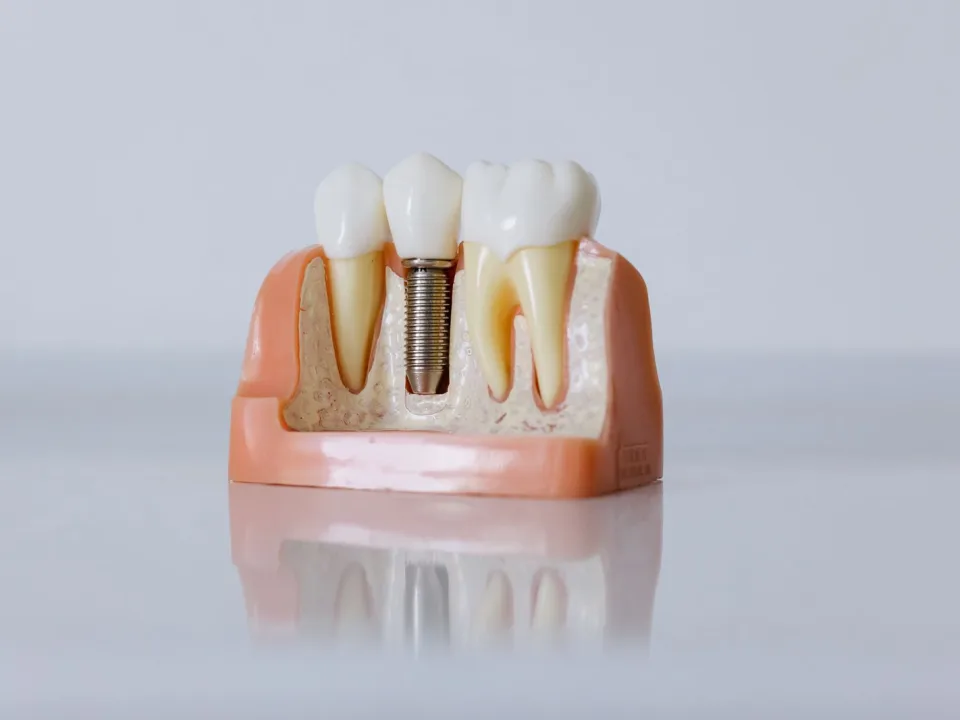
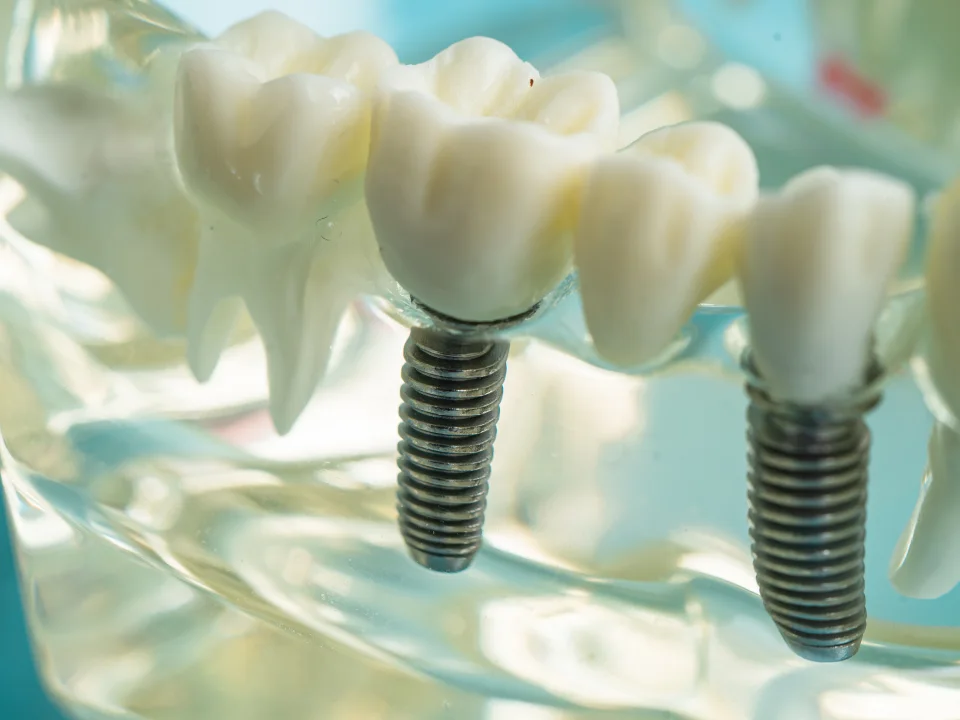
All-on-4 dental implants in Istanbul are a full-arch solution for patients who have lost all their teeth in a jaw, or whose remaining teeth can no longer be saved. Four implants are placed in the front part of the jaw, where bone is usually densest, and a fixed bridge of ten to twelve teeth is attached to them. The two rear implants are angled at up to about thirty degrees so that they gain length and anchorage while avoiding the sinus in the upper jaw and the nerve in the lower.
The technique sits within the wider family of implant treatments and was developed specifically to reduce the need for grafting. Where the case allows, a fixed temporary bridge is fitted on the same day as surgery, so you leave with teeth that do not come out.
Who is All-on-4 suitable for?
It suits patients with a failing dentition, those already wearing full dentures, and those facing the loss of their remaining teeth. It is particularly valuable where the back of the jaw has resorbed, because the tilted implants avoid those areas altogether. General health, smoking status and gum health are assessed as for any implant surgery.
- Full upper or lower denture wearers who want a fixed alternative
- Patients with widespread decay or advanced gum disease across an arch
- Patients with moderate bone loss at the back of the jaw who wish to avoid grafting
- Patients who want a predictable, well-documented full-arch protocol
When another protocol is better
Very heavy bite forces, a long arch or a wide jaw may call for All-on-6. Severe upper-jaw resorption that leaves too little bone even for tilted implants may be treated with zygomatic implants. The CBCT scan and your dentist decide, after examination, which protocol serves you best.
The procedure step by step
All-on-4 is planned digitally and often executed with a surgical guide, so that the implant positions match the bridge design decided in advance.
- Assessment: clinical examination, photographs, digital scan and CBCT scan of both jaws.
- Planning: implant positions, angles and the design of the temporary bridge are fixed in software and reviewed with you.
- Surgery: any remaining teeth are removed, the four implants are placed under local anaesthetic with optional sedation, and multi-unit abutments are fitted.
- Same-day teeth: where implant stability allows, a fixed acrylic temporary bridge is attached within hours of surgery.
- Integration: three to six months at home on a soft-to-medium diet while the bone bonds to the implants.
- Final bridge: impressions, framework try-in and fitting of the permanent bridge, usually in zirconia.
Advantages and limitations
The advantages are speed, predictability and the avoidance of grafting in many cases. A single surgical session replaces an entire arch, the temporary bridge restores appearance and speech immediately, and the final bridge is fixed, cleaned with a brush and a water flosser rather than removed at night.
The limitations are honest ones. Four implants carry a whole arch, so each is important; the temporary phase demands a careful diet; and the bridge has a small amount of pink acrylic or ceramic gum work where the natural gum has receded, which is visible only if the lip line is very high. The protocol is not a shortcut around biology and still needs the same months of integration.
Healing and aftercare
Swelling and bruising are more noticeable than after a single implant, peaking around day two or three and settling over a week. Prescribed medication, cold compresses and rest cover the first days. Most patients are comfortable in public within a week, and many fly home four to five days after surgery.
During integration the temporary bridge is protected by a soft-to-medium diet: no crusty bread, nuts or tough meat for the full healing period. This is the single most important instruction in the whole process. Cleaning is with a soft brush, a water flosser and the prescribed rinse, as detailed in the aftercare guide.
All-on-4 compared with All-on-6 and conventional dentures
All-on-6 uses two additional implants to spread load across a wider base and is favoured for heavy biters, long arches and the upper jaw where bone is softer. All-on-4 is favoured where posterior bone is limited and the anatomy suits tilted implants. Neither is universally superior; the choice follows the scan.
A conventional full denture rests on the gum, moves with speech and chewing, and allows the ridge to keep resorbing. An implant-retained overdenture that clips onto two to four implants is a middle option, more stable than a denture but still removable. A fixed All-on-4 bridge is the closest approach to natural teeth in function and confidence.
Planning All-on-4 as an international patient
The first trip needs five to seven days: assessment and imaging on day one, surgery with the temporary bridge on day two or three, and two follow-up checks before you fly. The second trip, after integration, takes six to eight days to allow impressions, a framework try-in and any adjustments before the final bridge is fitted.
Remote follow-up between trips includes photographs and messages, and a home dentist may be asked to check the temporary bridge at the midpoint. Airport transfers, hotel coordination and appointment sequencing are handled for you; the details are on the transfers page and in the treatment journey.
- Trip one: 5–7 days, imaging, surgery and same-day temporary bridge
- At home: 3–6 months with remote follow-up and a protected diet
- Trip two: 6–8 days, impressions, try-in and permanent bridge
Risks and what to watch for
The specific risks of All-on-4 are early implant failure, fracture of the temporary bridge if the diet is not followed, and, in the upper jaw, sinus involvement if the anatomy is not respected. All are minimised by planning and by the instructions you are given. Bruxism is managed with a night guard once the final bridge is fitted.
Report increasing pain after day three, swelling that returns after settling, a bridge that feels loose or clicks, or any screw that seems to have loosened. A small chip in the temporary is not an emergency but should be photographed and sent so the clinic can advise. Questions before booking are welcome through the contact page.
Related reading
How it works at Habibler Clinic
- AssessmentSend an X-ray or photos; we reply with a written outline.
- Examination & 3D scanClinical check and imaging confirm the plan and timeline.
- TreatmentSessions are scheduled together, in the order agreed.
- Follow-upWritten aftercare and scheduled check-ups.